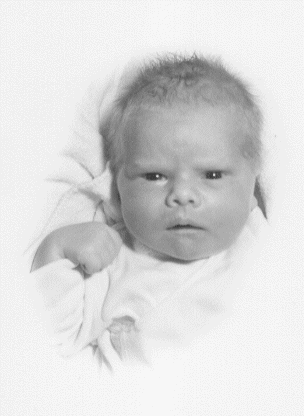
Born into a quiet that a child feels when he discovers he can walk on his own, but doesn’t feel ready.
Not literally blue. Not technically poor. But in the way that a child can be poor even in a house with food, and blue even in a room full of laughter.
I was born into that kind of quiet.
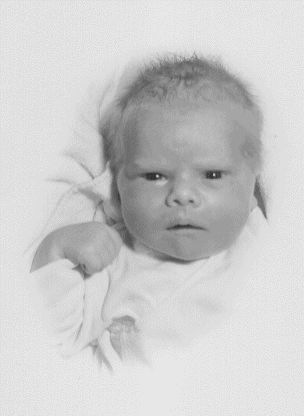
It’s hard to explain to people who grew up inside a steady world. People who grew up with parents that were… consistent. People who grew up with rules that made sense. People who grew up with love that didn’t have conditions attached like price tags.
Because when you grow up in a world that shifts under your feet, you become a person who is always bracing for impact.
You become a person who listens more than you speak.
You become a person who watches faces for weather.
You become a person who learns early that silence can be safer than honesty.
I was a child who learned to read a room like a map.
I learned what footsteps meant.
I learned what a door closing meant.
I learned what a sigh meant.
I learned what the tone of a voice meant.
I learned what it meant when the TV got turned up loud.
I learned what it meant when the house got too quiet.
I learned what it meant when someone was cleaning something that didn’t need cleaning.
I learned what it meant when someone was suddenly being nice.
I learned what it meant when someone was suddenly not.
And I learned that I could not change any of it.
So I adapted.
I became a kid who could disappear while still being present.
I became a kid who could be in trouble without knowing why.
I became a kid who could feel guilty without being guilty.
I became a kid who could feel like I owed something, even when I didn’t know what the debt was.
I became a kid who learned to make himself smaller.
Because small is less noticeable.
Small is less target.
Small is less… problem.
I didn’t have language for any of this at the time, of course.
At the time, it was just… life.
At the time, it was just… normal.
At the time, my feelings didn’t feel like feelings. They felt like facts.
I didn’t think “I am anxious.”
I thought “This is how the world is.”
I didn’t think “I am lonely.”
I thought “This is what it means to be me.”
I didn’t think “I am sad.”
I thought “This is the baseline.”
And when sadness is baseline, you don’t notice it as sadness.
You notice it as gravity.
That’s what I mean by poor.
Poor isn’t just money. Poor is absence.
Poor is what you don’t have and don’t even realize you’re missing, because no one ever showed it to you.
Poor is safety.
Poor is stability.
Poor is being able to relax.
Poor is knowing that the rules will be the same tomorrow as they are today.
Poor is knowing that love isn’t a bargaining chip.
And blue…
Blue is the color of looking out a window too long.
Blue is the color of being awake when you shouldn’t be.
Blue is the color of knowing things you didn’t ask to know.
Blue is the color of a child who learns too early that adults are not always safe.
Blue is the color of learning to laugh at things you don’t find funny, because laughter is camouflage.
Blue is the color of becoming “mature” too young, which is just a polite way of saying “damaged in an efficient way.”
I was born a poor blue child.
And I grew up into a poor blue teenager.
And then a poor blue adult.
And I carried that blueness into places where it didn’t belong.
I carried it into friendships.
I carried it into relationships.
I carried it into jobs.
I carried it into rooms where everyone else seemed to be living with their feet flat on the ground, while I was still balanced on the edge of a cliff.
Because when you grow up braced for impact, peace feels suspicious.
Calm feels like the moment before something breaks.
Kindness feels like a setup.
Compliments feel like a trick.
Love feels like a test.
And you don’t even notice you’re doing it.
You just… react.
You pull away.
You make jokes.
You get defensive.
You get cold.
You get loud.
You self-sabotage.
You leave first.
Because leaving first feels like control.
And control feels like safety.
And safety feels like…
Well.
Safety feels like something you never had enough of.
So you try to build it out of the materials you have.
And sometimes the materials you have are not good.
Sometimes they are fear.
Sometimes they are anger.
Sometimes they are pride.
Sometimes they are numbness.
Sometimes they are distance.
Sometimes they are addiction.
Sometimes they are avoidance.
And you build a life out of that, and it kind of works.
Until it doesn’t.
Until something happens that makes you realize you’ve been living inside your own defense mechanisms.
Until something happens that makes you realize you’ve been surviving, not living.
And then you have a choice.
You can keep being the person who learned all those patterns, or you can become the person who unlearns them.
And unlearning is harder than learning, because learning is addition.
Unlearning is removal.
Unlearning is telling your nervous system that it doesn’t have to live at red alert.
Unlearning is telling your brain that it doesn’t have to scan for threats that aren’t there.
Unlearning is telling your heart that it can stop flinching.
Unlearning is teaching yourself what safety actually feels like.
And the hardest part is that safety feels boring at first.
Safety feels empty.
Safety feels like a room without noise.
Safety feels like standing still.
And if you grew up running, standing still feels like death.
So you create drama, not because you want drama, but because drama feels familiar.
Drama feels like home.
Pain feels like home.
And it takes a long time to make peace feel like home.
I was born a poor blue child.
And I am trying, even now, to stop being poor and blue.
Not in the sense of money.
Not in the sense of sadness.
But in the sense of what those things really mean.
Absence.
Gravity.
The weight of old weather.
I am trying to learn that I can exist without bracing.
I am trying to learn that I can be loved without earning it.
I am trying to learn that I can relax without being punished for it.
I am trying to learn that I can be safe.
And if that sounds simple, it’s because you didn’t grow up poor and blue.
If it sounds dramatic, it’s because you didn’t have to build your whole personality out of adaptation.
If it sounds familiar…
Then maybe you did.
And maybe you’re still trying, too.
The lived version of this story appears in the book chapter here.