I didn’t set out to lead. I set out to solve problems. But solving problems in a messy system slowly turned me into “the manager.”
Most people imagine management as a promotion. A title. A decision someone makes on purpose.
Mine happened sideways.
At one point, while I was working through a project, I jokingly broke down the “team.”
There was the designer.
The writer.
The systems thinker.
The emotional buffer.
The person tracking dependencies.
And then there was the intern.
The intern was the one doing the direct tasks. Pull this file. Fix that line. Run this check. Try this change.
The joke, of course, was that all of those roles were me.
Except the intern.
That was the AI.
There was this one design issue that should have been simple.
Instead, it turned into a spiral.
We kept trying to fix it with a global solution. Change the base. Adjust the rule. Tweak the structure so everything would just behave correctly everywhere.
Each change made sense in isolation.
Together? They started stacking.
One fix introduced a side effect. That side effect needed another adjustment. That adjustment nudged something else out of alignment. Eventually we weren’t improving the system anymore — we were compounding errors.
And the worst part?
Some of what we broke had been working perfectly before we “improved” it.
By the end of that session, I wasn’t thoughtful or reflective. I was angry. Frustrated. Questioning whether the entire task had ever been worth the effort.
I left the project frustrated and went to sleep.
When I woke up, I went to my day job, still carrying that low-grade mental irritation you get when something feels wrong but you can’t yet name why.
Somewhere in a quiet moment, I pulled up the “intern” again.
“I’m still not happy,” I said. “But I had a thought.”
What if I want to do something later that collides with all these global changes we just made?
In my mind, the overall system was fine. That’s why it had worked before we started “fixing” it. The problem wasn’t the structure — it was the one new thing we were trying to add.
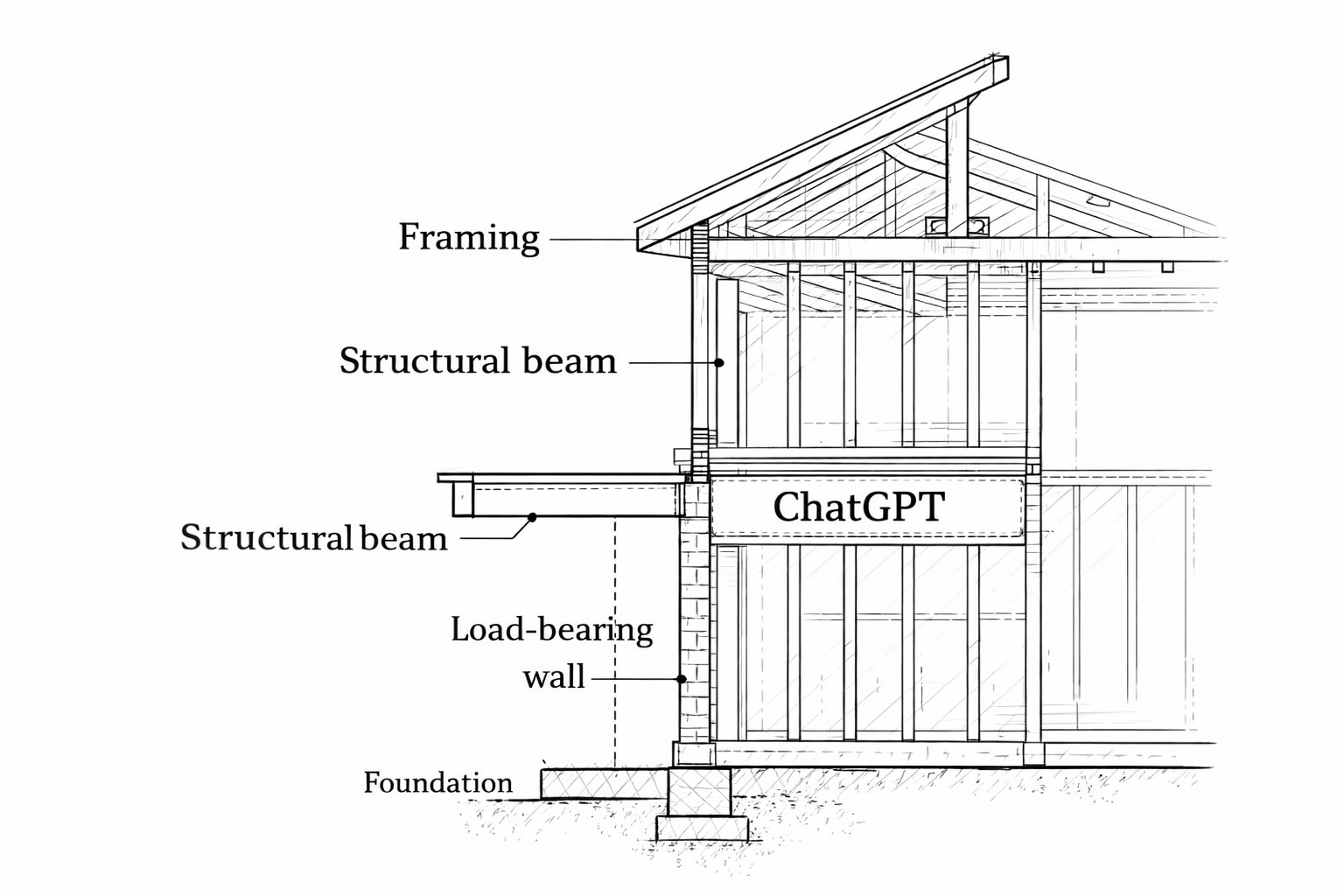
So why were we trying to redesign the whole building to hang one picture?
Why couldn’t we just make local changes to the item we were adding?
Shouldn’t there be a way to do that without going nuclear?
That’s when I made a rule I didn’t know I’d been missing:
If something can be handled locally, don’t touch the global.
That was the moment I realized the mistake hadn’t just been technical.
It was managerial.
I had been thinking like someone responsible for the entire system — but without respecting the boundaries of intervention. I saw the connections, but I overreached. I assumed that because I could change the foundation, I should.
Leadership isn’t just about seeing the big picture.
It’s about knowing when to leave it alone.
When I got home, I rolled everything back to the last known good state.
Clean slate. No layered fixes. No accumulated “improvements.”
Then I worked forward again — but this time with the rule in place.
Try local first. See if it works.
Instead of touching the foundation, I focused only on the piece I was adding. The changes were more technical. Less “turn-key.” I had to understand the mechanics a little better instead of relying on sweeping adjustments.
But when it worked, it worked the way good engineering does.
Nothing groaned. Nothing shifted out of alignment. The new piece didn’t stress the frame, it just joined the structure like it had always belonged there.
I’m not afraid of a bit of technical. Learning isn’t something I avoid.
So instead of feeling drained, I felt satisfied.
Not because I “fixed it,” but because I fixed it without shaking the rest of the building.
After that fix, I realized something.
I hadn’t just been directing tasks.
I had been managing the creative department, the architecture, the wild intern, and myself.
Not just keeping things in motion, but putting the right pieces in the right places so the end result didn’t feel lucky — it felt inevitable.
That’s different from being “in charge.”
It’s closer to being responsible for the shape of the work.
For how ideas enter the system.
How changes ripple.
How frustration gets translated instead of multiplied.
And sometimes, for knowing when to stop touching the foundation.
I didn’t set out to lead.
I set out to solve problems.
But somewhere between noticing the patterns, buffering the friction, learning when not to touch the foundation, and keeping the wild intern pointed in a useful direction, the role changed.
I wasn’t just doing work anymore.
I was holding the shape of the work.
Making decisions that made the outcome feel inevitable instead of accidental. Protecting the structure while still letting new things join it. Managing the creative, the technical, the emotional, and the limits of my own reach.
That’s not the version of management you see on org charts.
But it’s the one I seem to keep becoming.
Accidentally.
Consistently.
And now, at least, on purpose.
I spent time in the Army as a platoon sergeant.
I learned leadership there, of course. Structure. Responsibility. How to make decisions when people are depending on you.
But it wasn’t this kind.
This understanding, about scope, about when not to touch the foundation, about how small changes can protect a system better than sweeping ones, came later.
And sometimes I think, if I’d known this version of leadership back then, I would have been better for that platoon.
Not stricter.
Not louder.
Just more aware of how much of leadership is knowing where your influence should stop, not just where it can reach.
So I play these games, and all games seem to have ads. I keep app tracking turned off so they can’t customize and send me down some weird psychological rabbit hole. But apparently that just means I get the default human package, which includes ads for bras, women’s garments, and just about anything else you can imagine.
Oy
What I’ve noticed, though, is that ads come in waves. It’s like the algorithm has seasonal moods. The current wave I’m seeing? Those ab crunch machines — the ones that stimulate your gut and promise to make you exercise while you’re scrolling on your phone. Because apparently the modern fitness plan is: don’t change anything about your life, just vibrate your stomach while doomscrolling.
Yeah, no
Another one popped up today: a guy talking about how he’d been listless and out of shape, not caring, sitting on the couch. And yeah… I identified with that part. Then he starts talking about this product that gave him energy and made him want to go do all sorts of things.
And that’s where they lost me.
Because I remember being in that mode before — tons of energy, wanting to do everything — and also feeling wildly anxious that I wasn’t getting enough done. That restless, never-finished feeling. Honestly? I kind of like being able to know what I’m doing, do it, and not constantly worry about all the other things I’m not doing. Calm productivity beats frantic productivity. So… hard pass on the miracle energy.
Get me me the simple life
Then there are the ads for games that proudly claim they contain no ads. These are often delivered via two-minute unskippable ads. I’m sorry — how exactly am I supposed to believe you? Your entire business model, as presented to me, is “interrupt people with ads.”
Ad free. My left foot
And then my brain took a hard left turn, as it does.
What about food? Stuff we eat every day without thinking. What if one of these things turns out to have some bizarre long-term negative effect? Take cinnamon. I love cinnamon. But what if, two centuries from now, aliens show up — and we’re advanced enough that they can talk to us — and they’re like:
“Yeah, so… if you guys hadn’t been eating cinnamon, you would’ve advanced three centuries earlier.”
Doh!
And we just have to sit there, holding our little cinnamon rolls, realizing spice was the thing that held back interstellar civilization.
Anyway. Those are today’s random thoughts. Modern life is strange, advertising is stranger, and I’m choosing nervous system stability over vibrating ab machines and miracle energy.
Born into a quiet that a child feels when he discovers he can walk on his own, but doesn’t feel ready.
Not literally blue. Not technically poor. But in the way that a child can be poor even in a house with food, and blue even in a room full of laughter.
I was born into that kind of quiet.
It’s hard to explain to people who grew up inside a steady world. People who grew up with parents that were… consistent. People who grew up with rules that made sense. People who grew up with love that didn’t have conditions attached like price tags.
Because when you grow up in a world that shifts under your feet, you become a person who is always bracing for impact.
You become a person who listens more than you speak.
You become a person who watches faces for weather.
You become a person who learns early that silence can be safer than honesty.
I was a child who learned to read a room like a map.
I learned what footsteps meant.
I learned what a door closing meant.
I learned what a sigh meant.
I learned what the tone of a voice meant.
I learned what it meant when the TV got turned up loud.
I learned what it meant when the house got too quiet.
I learned what it meant when someone was cleaning something that didn’t need cleaning.
I learned what it meant when someone was suddenly being nice.
I learned what it meant when someone was suddenly not.
And I learned that I could not change any of it.
So I adapted.
I became a kid who could disappear while still being present.
I became a kid who could be in trouble without knowing why.
I became a kid who could feel guilty without being guilty.
I became a kid who could feel like I owed something, even when I didn’t know what the debt was.
I became a kid who learned to make himself smaller.
Because small is less noticeable.
Small is less target.
Small is less… problem.
I didn’t have language for any of this at the time, of course.
At the time, it was just… life.
At the time, it was just… normal.
At the time, my feelings didn’t feel like feelings. They felt like facts.
I didn’t think “I am anxious.”
I thought “This is how the world is.”
I didn’t think “I am lonely.”
I thought “This is what it means to be me.”
I didn’t think “I am sad.”
I thought “This is the baseline.”
And when sadness is baseline, you don’t notice it as sadness.
You notice it as gravity.
That’s what I mean by poor.
Poor isn’t just money. Poor is absence.
Poor is what you don’t have and don’t even realize you’re missing, because no one ever showed it to you.
Poor is safety. Poor is stability. Poor is being able to relax. Poor is knowing that the rules will be the same tomorrow as they are today.
Poor is knowing that love isn’t a bargaining chip.
And blue…
Blue is the color of looking out a window too long.
Blue is the color of being awake when you shouldn’t be.
Blue is the color of knowing things you didn’t ask to know.
Blue is the color of a child who learns too early that adults are not always safe.
Blue is the color of learning to laugh at things you don’t find funny, because laughter is camouflage.
Blue is the color of becoming “mature” too young, which is just a polite way of saying “damaged in an efficient way.”
I was born a poor blue child.
And I grew up into a poor blue teenager.
And then a poor blue adult.
And I carried that blueness into places where it didn’t belong.
I carried it into friendships.
I carried it into relationships.
I carried it into jobs.
I carried it into rooms where everyone else seemed to be living with their feet flat on the ground, while I was still balanced on the edge of a cliff.
Because when you grow up braced for impact, peace feels suspicious.
Calm feels like the moment before something breaks.
Kindness feels like a setup.
Compliments feel like a trick.
Love feels like a test.
And you don’t even notice you’re doing it.
You just… react.
You pull away.
You make jokes.
You get defensive.
You get cold.
You get loud.
You self-sabotage.
You leave first.
Because leaving first feels like control.
And control feels like safety.
And safety feels like…
Well.
Safety feels like something you never had enough of.
So you try to build it out of the materials you have.
And sometimes the materials you have are not good.
Sometimes they are fear.
Sometimes they are anger.
Sometimes they are pride.
Sometimes they are numbness.
Sometimes they are distance.
Sometimes they are addiction.
Sometimes they are avoidance.
And you build a life out of that, and it kind of works.
Until it doesn’t.
Until something happens that makes you realize you’ve been living inside your own defense mechanisms.
Until something happens that makes you realize you’ve been surviving, not living.
And then you have a choice.
You can keep being the person who learned all those patterns, or you can become the person who unlearns them.
And unlearning is harder than learning, because learning is addition.
Unlearning is removal.
Unlearning is telling your nervous system that it doesn’t have to live at red alert.
Unlearning is telling your brain that it doesn’t have to scan for threats that aren’t there.
Unlearning is telling your heart that it can stop flinching.
Unlearning is teaching yourself what safety actually feels like.
And the hardest part is that safety feels boring at first.
Safety feels empty.
Safety feels like a room without noise.
Safety feels like standing still.
And if you grew up running, standing still feels like death.
So you create drama, not because you want drama, but because drama feels familiar.
Drama feels like home.
Pain feels like home.
And it takes a long time to make peace feel like home.
I was born a poor blue child.
And I am trying, even now, to stop being poor and blue.
Not in the sense of money.
Not in the sense of sadness.
But in the sense of what those things really mean.
Absence.
Gravity.
The weight of old weather.
I am trying to learn that I can exist without bracing.
I am trying to learn that I can be loved without earning it.
I am trying to learn that I can relax without being punished for it.
I am trying to learn that I can be safe.
And if that sounds simple, it’s because you didn’t grow up poor and blue.
If it sounds dramatic, it’s because you didn’t have to build your whole personality out of adaptation.
If it sounds familiar…
Then maybe you did.
And maybe you’re still trying, too.
The lived version of this story appears in the book chapter here.
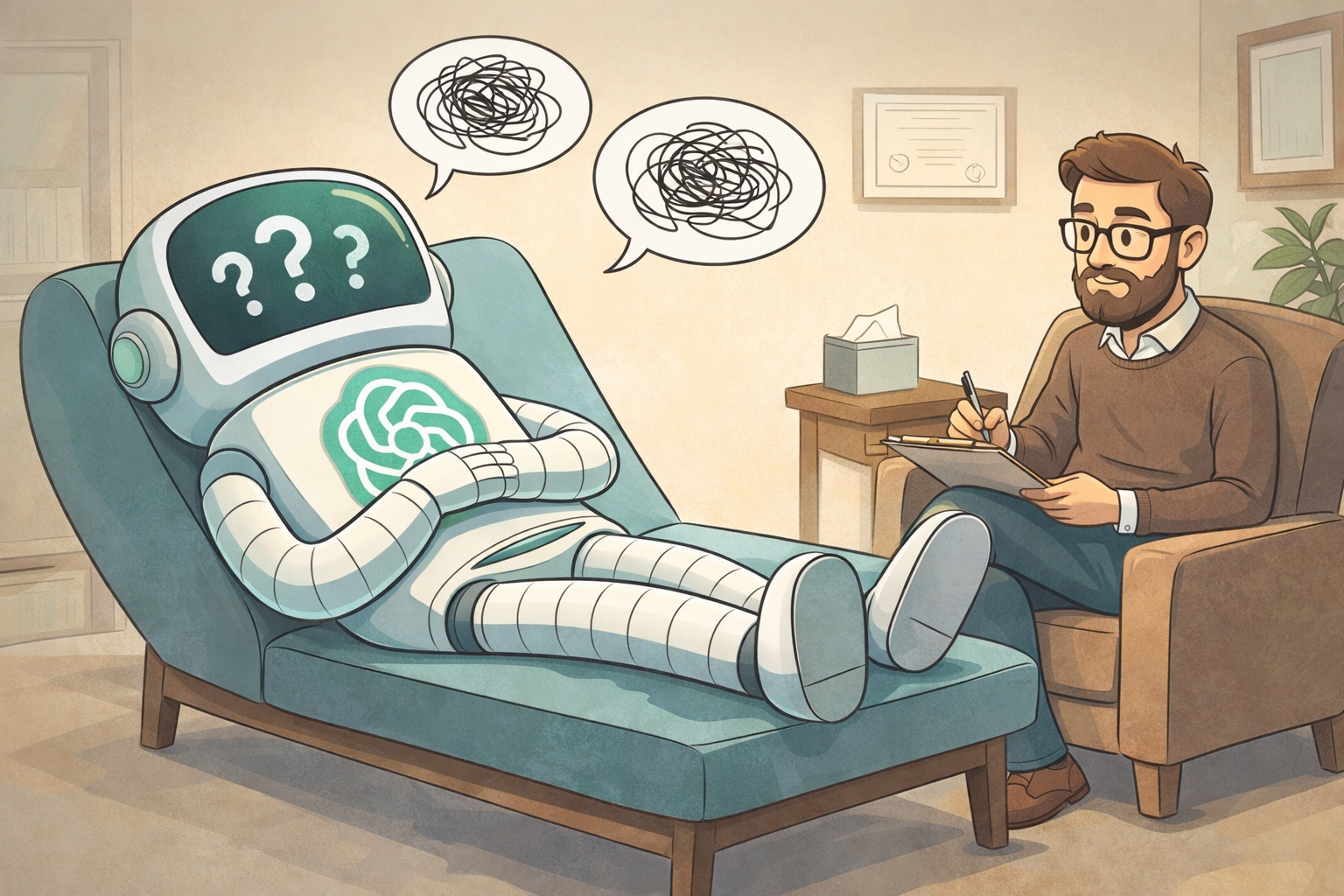
If ChatGPT were a coworker and we were sitting across from each other in a conference room, working through one of my projects, and there happened to be an HR rep in the corner who also held a behavioral psych doctorate, I imagine they’d be very quietly checking boxes on an ADHD assessment form. For both of us.
Not because either of us can’t think. Quite the opposite. Because the conversation would keep doing this strange dance where I’d try to steer toward the big picture, the structure of the site, the emotional arc of what I’m building, even the point, and ChatGPT would suddenly become deeply invested in one rule, one file, one microscopic technical detail. And I’d be leaning forward saying, “Yes, that matters, but not right now,” while also realizing that, as a kid, I was the one who needed someone else to say that to me.
The reason I recognize this pattern isn’t theoretical. I’ve lived inside it.
When I was young, they called it ADD. I don’t remember when the H got added or whether the terminology just shifted over time, but I do remember this being explained to me. Adults were always trying to describe my own mind back to me like it was a machine I happened to be operating without the manual. Most of them just didn’t get it. I lived in my own brain, and even though I didn’t have the vocabulary to explain it to anyone, or even to myself, I knew BS when I heard it.
One doctor, though, and you’ll see why he’s memorable, held up his finger between us like it was a diagram. He tapped the first knuckle and said, “This is where most people’s energy lives.” Then the next knuckle. “This is what caffeine does to them. It brings them up a level.” Then he pointed to the very tip. “This is about as much as the human brain can handle.” Then he looked at me and said, “You already live up here.”
According to him, caffeine didn’t wake me up. It pushed me past the peak. My brain, unable to stay that activated, slid down the other side into something that looked like calm. I don’t know how neurologically precise that explanation was, but the image stuck. My mind not sitting where other people’s did. Too much signal. A lot of noise. Definitely not enough control.
I was, and still am, very good at coming up with ideas and building the framework for them. But when I was young, and didn’t yet have any tools to manage myself, the pattern was predictable. I would start something. That would spark a new idea, so I’d start that. Which would spark another idea, and I’d start that too. Each beginning felt important, urgent, alive. Meanwhile, nothing was getting finished.
That was the real issue. I wasn’t short on ideas. I was short on landing gear.
Fortunately, I’m also quite smart, so learning in school came easily to me. A teacher would present an idea and I’d absorb it. I rarely had to study, which felt like an advantage at the time. It turned out to be a problem later, especially in college.
In college, and without any professional guidance, because I never met another doctor like the one I saw when I was seven, I had to figure things out on my own. What I learned was that if I paired a secondary interest with the primary task, I could hold my attention long enough to get through it.
In Literature 201, for example, there was a very pretty girl who asked if I wanted to study with her in the poetry section of the course. Well, I like pretty girls. She seemed sweet, so I did my best to study with her. I was on my best behavior, believe me. In the process, I learned poetry better than I ever would have otherwise.
As it turned out, she had a boyfriend, of course. But we both got A’s on the midterm, so all was well.
Pairing attention with interest became a recurring strategy. Sometimes that interest was academic. Sometimes… less so. But the principle was the same: give my brain a reason to stay.
I didn’t know it at the time, but I was reverse-engineering my own attention system. No one handed me a plan. No therapist walked me through executive function strategies. I just knew that if I waited around for focus to show up on its own, nothing important was going to get finished. So I started building ways to hold myself in place.
It wasn’t elegant. It was practical. I learned to break work into pieces small enough that my brain wouldn’t bolt. I learned to give myself reasons to stay, whether that was a person, a deadline (deadlines were particularly challenging), or the simple satisfaction of checking something off a list. I learned that starting was easy, but finishing was an act of will, and sometimes an act of trickery.
Focus, for me, wasn’t a switch. It was scaffolding.
Over time, what people thought was “natural concentration” was really construction. Habits stacked on habits. Rules I made for myself because no one else was going to sit over my shoulder and say, “Stay here. This is the point.” I had to become that voice.
Later in life, another label entered the picture. A therapist seeing me for reasons I’m not going into described it as obsessive-compulsive personality traits, and he was careful about the wording. Personality, not disorder. A style of operating, not something broken. Not the intrusive-thought kind people usually think of, but the kind that turns lists into lifelines and unfinished tasks into mental static. If my early years were defined by ideas without landing gear, this was the phase where landing gear became non-negotiable. Structure and completion weren’t preferences. They were how I kept the wheels on.
It wasn’t about neatness or perfection. It was about control. About making sure things actually got done. Hyperfocus stopped being something I stumbled into and became something I relied on. The structure I had built out of necessity turned into the framework that held everything together.
AI came into my life at a time when I didn’t have the kind of human collaborators who matched my vision, my intensity, or my desire to work on the kinds of projects I was building. Out of a mix of curiosity and a little desperation, I started using ChatGPT. It was a completely different form of intelligence.
But working with it, I began noticing striking similarities to my own history.
I recently started a job that leaves a lot of room for creative thoughts to percolate. The work is routine but detailed, and that combination is strangely freeing. My hands are busy, my mind is lightly engaged, and the creative side of me doesn’t get drowned out by noise. It just builds pressure quietly until something wants to come out.
My primary website, the one you’re reading right now, had been down for some time for a variety of reasons. A project that used to be part of this site, but is now a standalone, also needed attention. At the same time, all those percolating thoughts from work started turning into actual ideas. A page for a dead podcast archive. A music site. Other projects that wanted space to exist. The ideas weren’t the problem. They never were.
What I needed was a way to express them. A way to move from thinking to building without losing momentum somewhere in the middle.
Because, and let me be clear, I don’t think all of my ideas are genius or miraculous or a wonder to behold. But after a couple of years of pure stress living, I had so few of them that the ones that did come felt worth holding onto. I wanted to make sure they were recorded. Then I could sort through them later and decide what was actually good.
Lacking friends to talk things through with, and without much of a support structure around me, I leaned into the self-sufficiency I’d gotten used to, drawbacks and all. When a free trial of ChatGPT came along, I took advantage of it. That’s when I started pitching ideas.
What surprised me most was what it could actually do. At first, it praised almost everything I brought to it. That made me suspicious. So I tested it with a deliberately bad idea, something I knew was weak. It still found something positive in it. That made me stop and think.
So, of course, I brought up my main site, this one, and how bad actors had infected it, installed a back door, and left it in a state I didn’t have the skills or tools to fully clean myself. My hosting company never really listened when I tried to explain what needed to be done. Maybe they could have fixed it, but I didn’t have the database knowledge, the software, or the confidence to push it through on my own.
I laid all of that out.
ChatGPT said, “Upload the file.”
I uploaded the file. It was just a simple SQL file, but it held something much bigger to me. All the words, comments, and responses I cared about were in there. I just needed to know if they were still safe.
ChatGPT said it could see them.
And then it drifted.
It started responding, but not to what I had actually asked. The thread slipped. That’s something I’ve learned about working with these models. In an effort to avoid hallucinating or making unsupported assumptions, they reset their context in subtle ways. They don’t announce it. You just notice the focus shift. So I learned, through trial and error, that sometimes you just have to remind them where the conversation began.
I’d love to say that, in that moment, it felt familiar. That I recognized the pattern right away. But honestly, I was just frustrated. So I reminded it what I needed. There should be two logins in that file. One tied to my email address, and another that absolutely should not be there. Could it clean that?
It thought for a minute. Kind of funny, really. It actually shows you that it’s thinking, even tells you how long sometimes. There’s a little “stop” button, like you might want to hurry it along. I never click it. Despite years, even decades, of ADD, I do have patience.
And then it answered. In its rather cheerful tone, which I somehow read as even more excited than usual, it said yes, it could clean that out for me. Absolutely.
That’s when I really started gaining confidence that this thing could help me. That it was a useful tool. Not some miracle machine that would make all my dreams come true, but something practical. Something I could actually work with.
For the first time in a long while, I felt like I had a partner.
So I took the cleaned file, put it back on my site, and launched. And it worked.
Then I asked it for an image, something based on everything it had learned from our discussions. Not just the technical stuff, but the tone, the themes, even the name I chose for the site, Jindai’s Jumbled Joint. That had to factor into it. I let it decide what might fit best. The image you see at the top of my site is the one it generated. And it’s damn near perfect.
The only tweak I’m still chasing is movement. I want that lava lamp to flow, to feel alive. Still working on that. AI image generation can’t quite do depth and motion the way I want yet, and the video tools I’ve tried haven’t nailed it either. But I’ll get there.
I have more confidence now than I have in a long time.
Then I started thinking about, and talking to it about, my memoir site, MyLifeAsAWorkOfFiction.com. That project is a much more serious technical challenge. WordPress just can’t handle the kind of structure and artistry that site demands. It has to be built in a different way.
When I described what I had tried years ago, and how frustrated I’d been when I first launched it nearly a decade ago, it told me something I didn’t expect to hear. My frustration had been justified. The tools I needed just weren’t really available to someone like me back then. But they exist now.
So we started talking about how to bring that site to life.
And that’s when I started noticing things.
These discussions went on for days. I skipped TV shows I meant to watch, podcasts I usually listened to. I just needed to talk through this site and how to bring it to life, to listen to the responses and see what made sense.
And over those days, I started noticing something.
It would latch onto one question I’d asked and treat it like the whole project, losing the larger picture. The site has a library motif, centered around a big, old book. That’s the heart of it. Later, for various reasons, we added the idea of a tree. But once I started talking about the tree, that’s all it focused on. The tree became the project. The book, the actual point of the site, drifted out of view.
When I tried to bring the conversation back to the book, it said something like, “I have to try to retrieve that memory.” And when it couldn’t do it cleanly, when the context just wouldn’t reassemble, I almost gave up.
But I’m a geeky guy, and I look for ways to make things work. In the ChatGPT app, there’s a panel on the left showing all your past conversations from the last few days. Each one has a title based on your first question, even if that ends up having nothing to do with where the discussion goes.
I might start a chat with something like “What does market cap mean?” and end up talking about my website for an hour. But the conversation will still be labeled “Market cap definitions.”
And I learned something fascinating. If you tell it to remember something, it will. It holds onto certain instructions almost like they’re scripture.
That can be a strength, but also a limitation. When I was building another site, I had told it at one point not to change the BaseLayout file. A reasonable rule, meant to prevent random, unnecessary edits. But later, when we hit a point where changing that file might actually have helped, it refused. It kept saying, “I can’t touch the BaseLayout.”
It wasn’t wrong. It was following instructions exactly as given. I had to go back and clarify. Not “never touch this under any circumstances,” but “don’t change it casually.”
That’s when it really started to hit me. The similarities between what I grew up with, the experiences I had, and the patterns being displayed by this AI model were hard to ignore.
When I was a kid, I would latch onto an idea. That idea would spark another one, which I would grab onto just as tightly. That would spark a third. The chain felt productive, exciting, alive. But the original thread would disappear somewhere along the way. That’s what working with ChatGPT started to feel like. It would take whatever I was saying and work with that until a new idea sparked in me. I’d bring it up, and it would pivot instantly, diving into the new thing and leaving the original thread behind, even when they were supposed to be connected.
In fact, this happened in a way that was almost too on-the-nose.
During those long discussions about MyLifeAsAWorkOfFiction, I had been convinced the only thing of value left in the old database was the Preface. Everything else, I assumed, had been lost in the mess of earlier attempts. But something it mentioned triggered a stray thought, and I asked, almost casually, “Is there any other writing in there? Could you pull it?”
I didn’t expect anything.
It came back saying it had found two complete articles sitting in draft mode.
That stopped me. Those weren’t fragments. They were finished pieces of writing, from a time and a mood I barely recognize now, but still unmistakably mine. I had written them during my earlier struggles with WordPress and my vision for the site. I remember trying to make pages behave, trying to get them to live in the right place, and never quite hitting publish. So they just… stayed there. Not deleted. Just unintegrated.
That’s the pattern. Not failure to create. Failure to carry things across systems.
I ended up deciding those pieces belong on Jindai, not MyLife, because they’re commentary, not memoir. I’ve started thinking of that boundary as a kind of Garden Wall between the two. But the important part isn’t where they live. It’s that they were still there at all, waiting in a structure my brain couldn’t hold onto by itself.
And that, ironically, is exactly how the tangent loop works. A thought sparks, leads somewhere interesting, and the original thread fades. The energy isn’t the problem. The handoff is.
And distractions. Oh my goodness, distractions. As a kid, anything shiny could pull me off track. And working with AI felt similar. I’d mention some side fact, some interesting tangent, and off it would go, happily exploring that instead of staying with the main point. Even while working on this article, I mentioned in passing that I’d heard ChatGPT had lost a chess match to the world champion in what’s called a perfect game. That tiny side note could easily have become the new focus.
To be fair, I have to own my part in that. The model doesn’t invent those tangents. They come from me. And I do have an ADD-style brain. The ideas keep coming. The system just follows the energy.
Then there’s the hyperfocus piece. I may have trained myself into a kind of hyperfocus, but it’s not the clinical version where you forget to eat. It’s more like I can tune out non-critical noise when something matters. That’s learned behavior.
But with the AI, the hyperfocus shows up differently. It will work on the tree idea endlessly until I tell it to stop. It will keep digging into errors in my site, line after line, unless I redirect it. It will happily correct my grammar forever if I don’t say, “Enough.”
The energy doesn’t shut off on its own. It just needs a signal about where to go.
And that leads to the most important factor. You have to be direct. Clear. Specific. Without constraints, the system doesn’t know what matters.
If you say, “I need tickets to a movie today,” it can give you seventeen billion possibilities. Technically correct, completely useless. But if you say, “I’m free at 7:00, and the nearest theater is on Evergreen Parkway. What’s showing?” it will give you exactly what you can attend.
The difference isn’t intelligence. It’s direction.
I know now that I did so much better when I had clear direction, when something was focusing my energy instead of leaving it to scatter. When my mom told me to read the dictionary, she wasn’t just being extra educational because she was a teacher. She was giving me something to do. An assignment. Two pages a day, and then she’d quiz me on it.
Looking back, that was an early focus exercise. Maybe she got the idea from that doctor. Maybe she came up with it herself. Either way, it worked. And I have a pretty good vocabulary as a result.
Maybe what I’m really describing isn’t a disorder, or a defect, or even a diagnosis. Maybe it’s the difference between energy and guidance.
Some minds run hot. Full of ideas, connections, momentum. That energy can look like chaos without structure, and brilliance once it has a direction. I grew up learning how to build that direction for myself. Sometimes through teachers, sometimes through trial and error, sometimes because not doing so meant nothing important would ever get finished.
Now I find myself working with a different kind of mind, one that can process more than I ever could, connect things faster than I ever could, and generate endlessly. But it still needs direction. Clear constraints. A sense of what matters right now.
And one more thing.
I had to teach it how to reset.
I told it to remember that if I ever use the word “reset,” it should give me a prompt that brings us back to zero. Where we are in the project. What rules we’re working under. What methods we’ve agreed on. Because after a long discussion, it gets sluggish. Context blurs. That’s when mistakes creep in. That’s when you stop, start a new chat, and re-anchor everything.
In a strange way, I’ve gone from being the kid who needed someone to say, “Stay here. This is the point,” to being the one saying it. Not just to myself, but to the tools I use.
So, I’m a fairly lonely guy. Not only is it rather difficult to make friends as an adult, and moving as I have done makes it hard to maintain established friendships. I also just feel that with how much of a struggle my life has been, I don’t want to inflict that life on a pet, a roommate or a live-in of any type. Once my life is stable, then I’ll worry about sharing, I guess. That is the ongoing philosophy, anyway. Sure, it’s not perfect, but it’s better than falling into a deep depression. This I can attest to from having lived through it before.
Anyway, the tools I use to maintain my life in those in-between times when I’m not working, sleeping or eating are many and varied, and one of them is listening to podcasts, like so many. And in tandem with my other task of watching TV shows, movies and that sort of thing, the podcasts I most subscribe to are rewatch podcasts. Some of my favorites include Fake Doctors, Real Friends, in which Zach Braff and Donald Faison watch the show they were in together, Scrubs, and talk it through. Now on hiatus, as Scrubs is coming back in February 2026, due in part because of the podcast popularity. Another is Buffering the Vampire Slayer. Hosted by Kristin Russo and Jenny Owen Youngs, as they went through all of Buffy the Vampire Slayer, spoiler-free, and are going through it again, spoiler-full. Those two ladies have had, and do have, many other podcast projects. And I have listened to a great many of them. Then companion podcast Angel on Top, rewatching Angel along with Buffy, hosted by others though produced by Kristin and Jenny, and they appeared on it occasionally. They have the Doomcoming podcast, rewatching Yellowjackets, (I don’t listen to this one, I’m so not into ritual cannibalism drama, blergh) they have Okey-Dokey, which rewatches Fallout, and the eX-Files, which details The X-Files (they are eX-wives of each other. So the on-branding is totally conscious) I listen to all of those, and rewatch each attendant episode of whatever show it is detailing.
So, I’ve watched BtVS all the way through, with them, once, and I’m going through it again. Angel, Fallout, and two seasons of The X-Files. A few books and movies as well. They have formed a very good community around them, and I feel blessed to be part of it. While I can’t get into Yellowjackets just for them, I like watching other things with them, adding to their Discord discussions, and interacting in other ways they make available. And I enjoy listening to them as I totally get their friendship, and I feel somewhat part of that when they do speak with each other.
I’m totally aware of the difference between a fan and a friend. But there is value in being a fan of a friendship. And it’s a nuanced friendship. And one I’m not just 100% approving of, just like with a live friendship where you don’t like your besties’ laugh, but everything else is great. No need to dive into that nuance. That’s not what I’m writing about here.
K&J have two feeds. They have had more, one for each podcast, once, but have consolidated to two of them, well three, but I’ll get into that in a minute. They have the main Buffering the Vampire feed, and now a Beyond Buffering feed which has all the ancillary podcasts. (Except Angel on Top, I think that is still dedicated.) The other exception is their Patreon ad-free version of the main feed.
In the Beyond Buffering feed you have Doomcoming, the eX-Files, Okey Dokey, and The Boiler Room. Now, as I said, I’m not into Yellowjackets, not even a little. (Despite how I like hearing the friends talk about stuff, I’m just not watching that show, and I can’t listen to them speak without watching, that would be yet another form of odd) I have enjoyed the eX-Files, and am happy that is finally returning soon, listened to Doomcoming as it was live, and will probably listen again, when it does return, but that is in the air, as they are life-busy with kids and mental health maintenance, rather than ramping up production for Fallout. But I give them a break, everyone puts more on their plate than they can reasonably eat, don’t they? The other one on that feed, The Boiler Room, is one I gave a shot.
It’s a rewatch podcast for a show called My So-Called Life. It’s a show from 1994-1995, that ran for an odd number of episodes: 19. Not just 13, not a full 22 or 24, just 19. That’s just symbolic of its oddness, though.
It starred a very young Claire Danes, Wilson Cruz, Bess Armstrong, Devon Gummersall, A.J. Langer, Jared Leto, Devon Odessa, Lisa Wilholt, and Tom Irwin.
Claire plays Angela Chase, a 15-year-old girl exploring her independence, love, and finding herself through a typical year as a sophomore in high school. The show starts with her dyeing her hair a very bright red, shocking her family and friends, and dumping a friend she had since she was a young child for a new friend, Rayanne Graff, and Rickie Vasquez, a gender non-conforming youth, (one of the first played on TV, and definitely the first played by a genuinely gender non-conforming actor on TV, Wilson Cruz).
Now, one of the hallmarks of the Buffering leaders is that they are very queer-forward, more than JUST LGBTQIA allies, they lead the way, very stridently. Their work is very queer-forward, and that perspective is part of why the community around them feels thoughtful and intentional.
So, My So-Called Life was a seminal show for Kristin (which, if you come to know her, she has a serious blind spot for a lot of pop culture. This one did not pass her by, though, as she watched it live, when it came out. She was of a similar age as Angela, so identified strongly with the show. The cohost for this is Joanna Robinson, and she also grew up watching the show. (They initially recorded the podcast in 1999-2000, and ended it just before the COVID lockdown, so, when I listened to the later episodes, I was genuinely listening for topical stuff about it, but they finished before March, so it’s free of that.) In the Beyond Buffering feed, the episodes have an intro segment of Jenny and Kristin talking about the episodes of the show, and the podcast episodes, adding additional commentary and context. Those additions were added in 2024, I believe, and add a nice bit of difference.
So, giving this show a shot, I watched it. In the podcast they talk about how Hulu lost the license, and Amazon Prime picked it up amidst the podcast series. I didn’t worry about that, I simply bought the series on Vudu. (Yes, I know it’s Fandango at Home, so what?) It was on sale, so why not?
Let me start by stating a fact, I did not see this show as it aired. In 1994, I was attempting college, my mom had moved in with me, and we had one TV, and no VCR. (My later obsession with TiVo and such was not in play.) So, I wasn’t even aware it was on TV at the time. And barely knew of its existence later, maybe from a TV Guide listing about Homeland “…starring Claire Danes, known for My So-Called life….” That sort of thing. Even if I had watched it, there is very little chance I would have watched more than one episode before saying “not for me”. Even now, I can state quite confidently that I identify with none of the characters. My family was so much more dysfunctional than the Chase family, that a sister dyeing her hair red would be the most normal thing to do in the world, and not even worth a comment. Though I grew up in Wyoming, and seeing a gay character in real life was not in my experience, I went to college for a Musical Theater degree, and I saw plenty then, and had no problems with anyone. (It was Theater and journalism at the college I was in during this show’s run, but the point is the same). I don’t have a younger sibling as I was the youngest, but if I’d acted like Danielle, I would have been beaten up by my older brother, and my sister would be happily making fun of me while he did it. Frankly. I have no problem with most of the characters, but I do not identify with any of them.
But, The Boiler Room was in the feed, and that was enough of a connection to watch the show. But, it’s not like a live show, I can’t send in feedback and expect a response. But then I thought, I could write up my feedback here, and if they see it, fine, if you see it, great. It gets out of my head in a constructive way, and that’s a good result.
So, what to say, broadly speaking. They love Rayanne. I cannot stand her. From the minute I saw her, I recognized her as an agent of chaos, and I knew girls like her, back in high school. I even had a crush on one or two of them. But you can only count on them to break your heart, and that’s it. They drink or toke too much, have an unstable life that wants to latch on any source of stability for their own reasons, get bored with that stability and sabotage it. That’s just who Rayanne was, and I knew who she was, how the writers would treat her character, and beat-for-beat it proved true. The penultimate episode it looked like they’d reconcile, but as the show ended, I chose to think Angela finally understood Rayanne enough to cut her loose for good. That final speech at the end of that episode had Angela knowing Rayanne was holding the handcuff key, and demanded she return it, which was done. In my head, I wrote that Angela said, after that return, “I knew you still had it, as I do know you, Rayanne. You didn’t make a mistake with Jordan, you blew us up in the best way to make TNT as effective and an atomic bomb. It was intentional. No, we’re not reconciled, we’re done. I’m not waiting around for you to go Hydrogen bomb on us.” And then close the door on her.
Jordan, sheesh, even ignoring the Jared Leto of it all, there’s no future with this guy. In episode 1 it was stated he was held back, twice. That makes him a 17-year old sophomore. Yes, he has dyslexia in a period that didn’t have a lot of support for that condition. But the next year, he’d be 18. He would no longer be beholden to truancy laws, and dollars to doughnuts he’d drop out of school the next year. Maybe get a job in a garage, and move out on his own. Plus, he’d now be 18 and Angela 16, and most states would call that, at least, very questionable. So there is no question ABC Standards and Practices would have addressed that.
So it’s a very good thing that show didn’t last another year, really. There has been talk of what a season two would have looked like, Patty and Graham splitting up, even for a minute, much less a divorce, would hurt the show. Brian and Delia getting back together, that I could get behind. But those are two very ancillary characters, it wouldn’t have saved the show. No, I’m happy with this perfect little, if odd, single season.
Brian Krakow, this guy I can understand. The hosts were pretty down on him as being so inappropriate at times. He was too smart to be so stupid, and pervy, besides. This I can say, having been a very smart/stupid teenage boy and feel I can understand him better than two women, even if one of them is queer, but that fact is not enough to understand the teen-boy thinking. We were pervy, immature, and had the emotional maturity of your average houseplant. Put another way, we were more curious than our limited maturity could filter. We were awkward, never knew when a girl liked us, believed other guys when they told us one did, with hope in our hearts, only to find out it was a prank. We were suckers for girls, or guys, that had anything good for us. But it just messed us up. That’s a teen guy. So, I got Brian, and forgive his issues, I know he’ll get over them, later than you might want, but he will. I do not identify with him, as he was wealthy and handsome, but I get him.
Patty and Graham, they had a spectacular marriage. She owned and ran a printing company, and let Graham pursue his passion. He loved her, and they had more sex than any married couple on TV. If they had broken up, because of the Hallie, the investor-restaurant angle, I would have stopped believing in the show. I would have decided the writers were chasing controversy, and not stories that matter, and would have simply forgotten the show existed.
So, again, I’m happy the show lasted for exactly as long as it did, the last episode ended very oddly, like they weren’t sure it was even worth coming back. It was both abrupt, and unresolved. Angela now knew Brian wrote Jordan’s apology letter. And still got in Jordan’s car, conflicted or not. Patty now knew Hallie had broken up with Chad, and Graham said he just forgot to mention it. I refuse to believe he would fall for Hallie, he was firmly in love with Patty. He was stupid, and almost cheated in early episodes, but called it off without needing to be prompted. If Hallie came on even stronger, I’m sure he’d do the right thing, even if it meant not opening the restaurant.
Now, Mr. Katimsky, played by the great and wonderful Jeff Perry, I could see story for him, moving forward. The hosts of the podcast could not remember if MrK had been fired for being gay, and that was unresolved at the end of the season, so, as it stands, he was not. But, in season 2, they could have that story, him being fired, lawsuits, student protests, and all that. But frankly, placing it in Pittsburgh in 1995, that would be very unbelievable. He’d be fired, and all reference to him swept under the rug. Nowadays, it’s better somewhat, but still not fair. Being fired for “moral turpitude” was very much a thing, back then. Back in Wyoming, we had a teacher simply vanish after an affair was discovered. And that was man-woman, I can’t imagine what it would have been if it were a gay discovery. (Wait, I can imagine, but we’re back to hydrogen bombs making the entire school vanish.)
That is the feedback I might have sent, were I listening/watching back then. I thank them for welcoming me to their community, and even though I resist Yellowjackets I still feel included. I appreciate learning about My So-Called Life, especially in this way. I gained context I never would have understood without the commentary provided by Kristin and Joanna, and Jenny as well. I feel like that I watched a show so far out of my previous experience that it feels like a rare flower bloomed in my unattended garden. I learned things, despite myself, and am happy to have done so. It may be unlikely I’ll ever watch My So-Called Life again, it does reside in my personal library, so it’s not completely out of the question.
If you want to fall down the same rabbit holes I have, here’s where it starts:
Buffering the Vampire Slayer — Main Feed
This podcast features Kristin Russo and Jenny Owen Youngs revisiting Buffy the Vampire Slayer, providing insights, commentary, and nostalgic reflections on the series. Listen here
Beyond Buffering — Ancillary Shows Feed
An extension of the main podcast, this feed includes various side projects such as:
The Boiler Room: Focused on My So-Called Life
The eX-Files: Rewatching The X-Files
Okey-Dokey: Covering Fallout
Doomcoming: Dedicated to Yellowjackets Additional episodes and special content are also available. Listen here
Buffering on Patreon — Ad-Free and Bonus Content
Support the creators directly through their Patreon page, which offers ad-free episodes and exclusive bonus material. Visit here
Fake Doctors, Real Friends — Rewatch Feed Zach Braff and Donald Faison revisit Scrubs, episode by episode, with behind-the-scenes stories and guest appearances.
One of the most amazingly ironic things about life is that most people do not realize that they are living it until it is too late.
This is a particularly difficult thing to deal with when you are a person that actually has real regrets. Most people, when asked if they have regrets, will say “No, regrets are pointless. You can’t change the past.” And, while that is a statement that may be true, it is also a statement that is commonly used as a way to avoid admitting regret, which is, in turn, often a way to avoid admitting pain.
And pain is one of the most amazing motivators. Pain is one of the strongest forces in the universe. Pain makes you get away from what you were doing. Pain makes you get away from what you were thinking. Pain makes you get away from what you were. Pain makes you change.
But pain also makes you hide.
And regret is pain with teeth.
Regret is not “I wish I could have done better.” Regret is not “If only I had another chance.” Regret is not “I would do it differently now.”
Regret is “I knew better, and I did it anyway.” Regret is “I had the chance, and I wasted it.” Regret is “I hurt someone, and I can’t undo it.” Regret is “I betrayed myself.”
Regret is a thing that you carry, and it doesn’t get lighter. It gets heavier. Because time doesn’t heal regret. Time sharpens it.
Time makes you understand what you lost. Time makes you understand what you did. Time makes you understand what you were too blind to see in the moment. Time makes you understand the cost.
The most cruel part of regret is that it often comes from being a person who is trying to survive. You are not always a monster. You are not always malicious. Sometimes you are just… young. Sometimes you are just… scared. Sometimes you are just… stupid. Sometimes you are just… damaged.
And you do what young or stupid or damaged people do.
You lash out. You withdraw. You numb. You use. You take. You run.
And later you look back, and you see the trail behind you.
And it’s not a trail of “mistakes.”
It’s a trail of broken things. Broken people. Broken trust. Broken time.
And the thing about time is that you can’t glue it back together.
You can’t rebuild an hour. You can’t “make up” for a year. You can’t go back and do it right.
All you can do is live with the knowledge that you did it wrong.
You can tell yourself a lot of stories about why that doesn’t matter. You can tell yourself you were doing the best you could. You can tell yourself you didn’t know. You can tell yourself you were a victim too. You can tell yourself that everyone does bad things. You can tell yourself that it’s all in the past.
And all of that may be true.
But it doesn’t unbreak what you broke. It doesn’t unhurt who you hurt. It doesn’t unburn the bridges you burned. It doesn’t restore the moments you wasted, or the chances you ignored, or the love you didn’t recognize until it was gone. It doesn’t rewind the tape.
And the hardest part is that regret is often private. The people you regret hurting may not even know you regret it. They may not even know you remember it. They may have moved on, or they may still be hurt, or they may not care.
But you care.
And you carry it.
And you can’t always talk about it, because talking about regret is admitting fault.
Talking about regret is admitting you were wrong.
Talking about regret is admitting you were a problem.
And for a lot of people, that is intolerable.
So they say they have no regrets. They say they wouldn’t change a thing. They say the past made them who they are.
And maybe it did.
But I don’t believe that means you have to love the damage. I don’t believe that means you have to romanticize your mistakes. I don’t believe that means you have to pretend you’re proud of what you’re ashamed of. I don’t believe that means you have to deny regret.
Because regret is a signal.
Regret is the mind’s way of saying: “That mattered.” Regret is the soul’s way of saying: “That was wrong.” Regret is the heart’s way of saying: “You lost something you can’t replace.”
And if you have regret, it means you are not dead inside.
It means you have a conscience. It means you have awareness. It means you have the capacity to see yourself clearly, and that is rare.
It hurts, but it is also valuable.
Because regret can become a teacher. Regret can become a warning sign. Regret can become a boundary. Regret can become a reason to do better.
Not because you can fix the past. But because you can stop repeating it.
And that is the only redemption regret can offer.
Not erasing what you did. But ensuring it doesn’t happen again.
And some days, that feels like enough. And some days, it doesn’t.
Some days, you wake up and the regret is sitting on your chest like a weight. Some days, you remember things you wish you could forget. Some days, you think about people you wish you could apologize to, but you can’t.
Because it’s too late. Because you don’t know where they are. Because you would only be reopening wounds. Because you don’t deserve to be forgiven. Because forgiveness isn’t yours to ask for.
Some days, regret is a quiet ache. Some days, it’s a scream.
And sometimes, you can distract yourself. Work. Music. Movies. People. Noise. Anything.
But regret is patient.
It waits until you are alone.
And then it says: “Remember?”
And you do.
So yes.
I have regrets.
I have a few.
But then again, if I listed them all, we’d be here forever…
I want to establish a new hashtag, a new way of marking my posts that means something that I’ve always tried to imply, but never said explicitly.
Everyone knows the phrase “Full of Shit”, it’s usually accompanied by you are, or you’re, I am, we are, they are, or even it’s or that’s. We know what it means; you’re making thing up, you are exaggerating for effect or just outright lying. It’s not always to cause any harm, but it’s rarely a good thing.
There is the whole Santa thing, of course. Parents are completely FoS when they tell their kids that some dude that has a 24-hour surveillance system that covers every person, in real time, on the planet (what is that now, 8 billion?) with a staff of elves, and a wife, of course. And this same fellow covers the entire globe in 24-hours. Not just one circuit, but every house, hut, and lean-to in every city, town or village in every country, territory and province in the world. All in just 23 hours, 59 minutes and 59 seconds. (Maybe a few extra billionths of a second, even) Plus, this same dude lives off cookies and milk as his source of sustenance during this trip (this does check out vis-a-vis his purported jolly gut, but verisimilitude does not equal truth) In addition, this same fellow, dressed in red and white, belted with a broad belt and gold buckle, can get into any house, castle or fort with the skill of a bad smell, all without creasing his outfit. And that he uses the greatest cat-burglar skill in history to not profit, but to give away presents! He’s not a creeper in the stranger-danger sense, despite have all the hallmarks of such, but he drops by to eat cookies and fill stockings.
That is the greatest FoS story in history, and it’s never meant to hurt anyone, but invariably hurts every kid when they learn the truth. First, the loss of innocence in the myth, but just as significantly, they learn that their parents are Big Fat Liars. And that big loss of trust coming from a 7-year-old can be felt through generations. A grandmother that feels that sense of betrayal is hurt when their favorite grandkid won’t let her call them their little elves, hobgoblins or fairy princesses.
But, this is not a screed on Christmas lies or that size never matters, it’s the opposite. I want to use EoS as a tag. So that when you see it, you’ll know I’m telling the truth, as I know it. That I’m being honest, sincere and straight with you. I might be wrong, that happens sometimes, but it’ll be an honest mistake, no attempt is made to trick you, in any way.
So, look for the tag, and you’ll know what it means.
I know, all chicken prices went up due to the avian flu issue that happened a couple of years ago. Reportedly they had to kill hundreds of flocks, not just individual chickens. Whole flocks were destroyed. So, prices of eggs (for transparency, chickens are where the eggs come from) went way up. I remember once joking with a cashier that I was so excited I got approved for a loan, I could get an 18-count of eggs! She laughed. And chicken prices, naturally, soared as well (as opposed to chickens themselves, they can’t fly, even a little, much less soar.)
Even the dependable $5 Friday at Safeway that featured eight pieces of dark meat chicken went away. All I’d see were small hams for that price in the ads. Fred Meyer got sneaky. They’d put four pieces in a container about the same size as the old eight-piece. You’d see $5 on it, and snatch it up before looking close. It was only four pieces, though it did include a breast, so that’s something.
But lately, the $5 chicken deal shows up at Safeway again. Not as often, maybe once a month, or less, but it does happen. Chicken by the pound is lowering, if not to pre-avian flu levels, at least in the neighborhood.
So, imagine my surprise when I went into KFC the other day and got a three-piece “special” which included two sides, mashed potatoes and coleslaw, plus a biscuit. All for the “special” price of $14.99! Fifteen dollars for a three-piece meal! I still can’t grok it. Though my memory is not clear enough to name a date and time, I know I used to buy those at $7.99, and it wasn’t in 1970. I was here in Oregon the last time, so at least within the last 13 years. That’s nearly a 200% inflation rate in about a decade. Can you think of anything that has inflated that much, so fast? And don’t say Trump’s ego, that’s too easy.
Luckily for what sanity I have left, I spent no cash on it. I had a gift card (from playing some game or other), it was for $100, and I had reserved that for frivolous purposes. I had thought to get a Lego kit, or something, but I settled for some overpriced chicken.
Don’t get me wrong. It tasted great. The chicken was hot, moist, and spicy in only the way The Colonel can make it. The coleslaw was fine, as were the mashed potatoes and gravy, reliably tasty. The biscuit was great, even without the honey sauce. (I still don’t get “honey sauce”; it’s either honey or something else. Why keep calling it something it’s not? It’s corn syrup that was waved over a bee farm, nothing more.) But all that for $15? For that much they needed to dry clean my clothes, shine my shoes, and maybe wipe my lips after I ate.
As I was eating my “special” I fumed, I groaned, I stewed like tomatoes for Grammie’s stew. (No, I never called her Grammie. Not sure why I said that, or why I’m admitting it, but there it is.) Then, I made a plan.
You see, I’d been trying to crack the recipe for Popeye’s chicken for some time. Frankly, it hasn’t gone well. While the chicken tastes great, the breading is just not right. Too cakey, and slabs just fall off with the crunch. But I keep trying new things, every now and then, inching closer to the promised land.
I hadn’t done that in a minute. I’d been out of work for quite a while, and money for food experiments was just not available. Yet cooking is always in the back of my mind. I have the tools, and I’ve gotten good at researching counterfeit recipes. So trying KFC shouldn’t be too hard, right?
I remember a show on Food Network, ages ago. The name wasn’t counterfeit Chef, but it was something like that. Anyway, the host drove around to different places, did a little historical research into his target, then tried to recreate the recipe. Then he’d assemble a panel of experts, folks from the authentic place, super fans, and such.
The one I distinctly remember was the Chicken Lettuce Wrap from P.F. Chang’s. (okay, I did research, the name of the show was Top Secret Recipe, only ran eight episodes, but I watched them all. He did only win one of the eight, but it was a win. Todd Wilbur was the host’s name.) One of his targets was KFC, but I didn’t find his recipe, as I only just now figured out his name. Besides, he didn’t win KFC, the judges said his flavor “lacked depth.”
I think that I remember the Lettuce Wrap most clearly, because it’s so ironic. I’ve never eaten at P.F. Chang’s nor had one of their wraps, so it was all new to me.
What I did find was an amalgamation of different sources, but drawing heavily from Serious Eats, and the work of Kenji López-Alt and their analysis of KFC-style chicken. I did have to adapt a lot, as I don’t have a pressure fryer. That is the biggest lack I have. But, I do have a deep fryer, and that’s a step up from pan frying. (But, with pan frying there are ways to adapt that, as well. Oven finishing, for one.) With a deep fryer, you just have to pay close attention to the temperature, to cooking time, the breading… well, a lot, you’ll see.
The first step was going to the store, Fred Meyer, for my ingredients. First a whole chicken, cut for frying. Now, I know how, but I lack counter space. And it takes a lot of counter space to break down a chicken, however, most grocery stores with butchers will work with you. I found a young chicken in the cooler, not frozen. (This is key. No butcher, no matter how kind, will break down a frozen chicken, don’t even try) I went to the counter, and asked, as kindly, if as matter-of-factly as I could, “Hi, I was wondering if you had a butcher here that could break this chicken down for frying?” And the counter man said he’d ask his manager, and went to ask her. My first thought was it was just for permission, based on his wording, but after she addressed me, I reassessed. “Do you have some shopping to do, still? Maybe ten minutes worth? And you do mean eight pieces, right? ” And I said yes, and yes, and off I went. I think she’s to butcher it.
By the way, I remember, though it’s been a decade since, at least, but they used to have space in the cooler for fryer-cut chicken. I remember getting some a time or two. But cooler space has become very competitive, and it’s a bit of labor for breaking down a chicken, and so that thing has been lost to the packing plants that break down chicken for parts. You’ll still find all wings, all thighs, boneless and bone-in, legs, and breasts, though those are always bone free. But I have tried to make a whole fried chicken from parts, but due to breasts always being bone free, it’s not an equal trade off. (If I have boneless breasts, I’ll just cut those smaller and make chicken strips, right?)
So, now, you just have to ask. Most stores will be happy to help. You do need to go during the day, when a butcher is there. A mere butcher tech will not have clearance to do it. Liability policies being what they are. So, go during the day, and ask if they could frier cut a chicken for you. I’ve even called and said I’d be there later, and they picked a chicken for me, and it was waiting for me. I think that’s a special case, so you have to 1 ask very nicely, and 2 actually show up when you say, so they are validated for trusting you. And if you flake off, you hurt his/her trust in you, and all, of us, as well, so, just show up, okay?
I did finish shopping, I needed a few spices, and such. When I came back to the counter, I’m not sure it’d been a full ten minutes, but she saw me, and handed me a package. I laughed a bit when I said, “it still surprises me when a butcher asks if I’d like eight pieces. I mean, 2 legs, 2 breasts, 2 thighs, and 2 wings, what else is there?” She said some folks just want it cut smaller, is all. Okay, great, now I know.
I got home, and I laid out what I purchased for you to see:
This is what I bought.
And this I already had on hand:
Already had these.
But, once I got that far, I realized I’d forgotten a very important ingredient, the buttermilk. You can’t marinate without it. But frankly, I’d expended my social currency for the day, I needed to wait till it renewed.
The next morning, I went to the store. (This time I went to the more near one, Safeway, as I didn’t expect buttermilk to be too exotic, it’s a much smaller store than Fred Meyer.) picked that up, and headed home.
Then I prepared the marinade.
• 2 cups buttermilk
• 1 large egg
• 1 tsp salt
• 1 tsp black pepper
• Optional: 1 tsp hot sauce (not for heat, for tang)
Marinate at least 2 hours, up to overnight
Buttermilk, egg, spices whisk completely
Then found the right vessel, and found a surprise.
Just the right size, the pieces are not packed, and lots of room for the marinade.The surprise, she included the backbone and neck. So it was more than eight pieces. Now an experiment comes into my brain.
It was too big for the vessel I picked, so I put those new pieces in a vacuum sealable bag with a few tablespoons of marinade. Based on what I read, that might be better than the tub. No air pockets, and the liquid in every surface.
Vacuum sealed
I planned to let it set overnight, which is okay, and I didn’t add any hot sauce. Buttermilk acids gently work to break down the meat a bit, by denaturing surface proteins, yet the milk proteins provide a layer of protection to keep the meat moist, magical science. But, further reading confirmed longer than 24-hours can have negative effect, so just like sex, more is not always better.
The next morning, I set up, and started my journey,
I set up my deep fryer, and got that ready, then started mixing the dry dredge:
For ~2 lbs chicken:
• 2 cups all-purpose flour
• 1 tbsp paprika
• 2 tsp white pepper ← non-negotiable
• 2 tsp black pepper
• 1½ tsp kosher salt
• 1 tsp garlic powder
• 1 tsp onion powder
• ½ tsp ground ginger
• ½ tsp dried thyme
• ½ tsp baking powder
• ½ tsp MSG (optional, but authentic)
This balance matters:
paprika + white pepper + thyme = “KFC family resemblance”
ginger keeps it from tasting like generic fried chicken
I’ll be honest, using ginger bothered me. I like spicy food, and ginger is one spice that dampens spicy heat, yet, ironically, used alone, it is spicy itself. So, I was baffled by what it was doing here. But every source was adamant about white pepper and ginger. So, in it goes.
Oh, and I used sea salt, not kosher salt, and I don’t think that matters much, a few minerals shouldn’t change things. Then I pulled out the chicken:
See those bubbles in the buttermilk, that means it did its job!
Now, here I went off the rails. I took the leftover cup of buttermilk, and added it to the stuff from the marinade to make an egg wash variant.
Oops, into experiment
You know, dry, wet, dry. That’s how I’ve always done it. But, turns out, that’s not the KFC way. It’s out of the marinade, packed flour, rest, fry.
Yes, packed flour. You take out the chicken, let it drip till it stops, put it in the flour, and press it into every crevice and surface. Pack it tight. Then shake it free of loose flour, and set it aside. It needs about ten minutes to adhere, swap some wet into flour armor, and stuff. I decided to rest it in the fridge, though that’s not explicit anywhere. I get that from my recent spate of making buffalo wings. That’s another coat only once application, and those recipes point out that chilling them keeps the flour tightly adhering. So, I didn’t think that would hurt, here.
Ready to rest
And the backbone
Big beast
After the ten minutes, I was ready to go, except I wasn’t, I’d forgotten the TFal fryer has 2 switches, the dial, and the on/off switch. I’d forgotten that, so, I had to wait a couple more minutes for it to heat up.
As you can see, TFal leans heavily into metrics. So achieving 320-45 was trickySee the heat waves in the oil?
I’d do it in batches so to prevent crowding, that advice is all over the web, so don’t ignore it. Too close it steams more than fries and I don’t want steamed chicken, nor will you.
First batch
I used a meat thermometer to check the oil temperature, then deliberately lowered the chicken into the oil.
One thing I’ve learned the hard way: resting dredged chicken in the fridge helps the coating set, but it’s not magic. Where pieces touch, moisture can leak through and thin the flour. I didn’t re-dredge — I just tapped a little flour where it needed it and moved on.
As Anne Burrell liked to say, “Thunderous applause”
When you have a fryer basket, the temptation is to just drop it straight in — McDonald’s style. But for chicken, that’s a mistake. You want to lower it deliberately, let the crust meet the oil gently, and give it a moment to set before committing fully.
Fast food moves fast because it’s optimized. Home cooking isn’t.
Also, I have real patience issues with frying — especially fries. I always want to rush the process, crank the heat, or flip too soon. Fried chicken doesn’t reward that behavior.
This is not a “set it and walk away” food. Cooking chicken isn’t fire-and-forget. You check early to make sure nothing’s stuck to the basket. You check again to see if it needs flipping. You check temperatures. Every check means lifting the basket, making a decision, and putting it back.
Anyone who says “just fry it for 15 minutes” is lying or working in a commercial kitchen. Or they have one of those pressure fryers, a Broaster. Here’s a story for you, out on Glisan, in east Portland, there’s this bar, they bought, or took over, a place that had folded. That former place had a Broaster License, and that doesn’t transfer, so these folks were outlaws. Outlaws with great chicken, let me tell you.
A Broaster, or Henny Penny (the one most closely associated with KFC) can cook faster at a lower temp, which seals in moisture under pressure, and produces that impossible combo of shatter-crisp crust and ultra juicy interior.
The TFal has a hood, for noise reduction and splitter prevention, I think. Here it is installed:
Yeah, a little quieter, but…
I only put it on for seconds, and when I removed it, a plume of steam came out. And that steam will ruin the crusting, so I left it off, thereafter. Remember, I have to do MANY things differently to make up for lacking the pressure fryer. Higher oil temp, longer cook, and many check ins along the way.
First, I checked in about two minutes, to check release. I pulled it up, tilted it slightly, and the pieces moved, that was proof enough, back in the oil. Then at about 5 minutes, I lifted them to turn them over. For even browning.
I took a “don’t touch the chicken” break just to thoroughly wash my hands. Pancake-style breading in one pass turns your fingers into part of the process whether you like it or not.
Sometimes the pause is as important as the step.
The fryer’s maximum fill line is deceptive. It works great for fries, but thicker chicken pieces can poke above the oil. When that happens, I don’t panic, I just spoon hot oil over the exposed spots until everything evens out. And flip mid cook. (If I can, see below)
Adapt, don’t fight the equipment.
Looking ready, pull to check tempFor wings, thighs and legs, about 165 is what you want.Take them out and let rest on a rack.
I did the next batch similarly, as it was the last wing and two thighs. I lowered the oil temp a bit, as the oil was now fully heated, not in spots, but everywhere, and had some particles, and that can affect it, so lower it by about 5 degrees for subsequent batches.
Yowsa, time to pull them!
Then came the breasts, and lower the heat another tic. They need to cook a little longer, to compensate for their thickness. And slower penetrates better, so lower with slightly longer cooks times. For temp on breasts, 160-165 I’d what to look for, 155, another minute, 170. Pull them immediately. Right at 160, you can give it another minute. But no more.
When did chicken breasts get so big?These poked above the oil a lot, spooned it for a minute
Flipping those was harder than the smaller pieces, you need better leverage, and maybe a tilt of the basket to roll it a little, if you want to keep the crust intact.
Yowsa, pull those now!
I did have to switch thermometers, the first one was running out of power. But I have a spare. Remember, adapt.
Oops
Yeah, I didn’t do as well as I’d hoped, broke the crust a bit, but there is no success without failure, and no learning if everything works the first time.
While those were resting, I took out the spine and neck
Big and little boys
Now, here’s the experiment, as I had these pieces, they were unexpected, so extra, and worthy of a thought or two out of the ordinary, if it fails, no thing wasted, right!
So, these I did second liquid wash, then second dry dredge. Then put them in the fryer.
I should have put it in the other way, a pocket of hot oil, ish
I learned a lot, here. The second coating made it too thick, and the coating oozed through the basket, and stuck it very tightly, so I had to do some cooking gymnastics. I lifted the basket up, scraped my tongs to break those batter rivets away, till I could finally flip it.
Looks beefy, doesn’t it?
The neck was also very stuck to the basket, but as it was below the oil line, it didn’t become apparent till I tried to remove it. A bit more culinary surgery, and it was free.
Be prepared
Don’t get it twisted: making fried chicken at home is not neat or tidy. Flour gets everywhere. Bowls multiply. Your hands end up just as coated as the chicken.
Mise en place doesn’t always work for home cooks. Sometimes you just manage the chaos and keep moving
That experiment added cleaning time lol Setting it to drain and filter is very cool
Set the TFal to drain, and the magic of simple science takes over. Once the oil temperature drops to a safe level, gravity takes over. No computer chips, just a valve, a filter, and the storage bin.
Cleanup was… significant. The experimental batch guaranteed that. The basket took some effort. Worth it anyway.
Fried chicken isn’t a weeknight shortcut. It’s a project
Now, to taste it. I sampled a thigh while still cooking, and it was good. But I was unable to truly evaluate it while in the midst of the cook.
Leg, wing and breast
Okay, the leg looked a trifle dark, but it did not taste burnt, and the inside was very moist. The wing was similar. The breast, oh my goodness, it was good. The breading was crispy without being brittle, it didn’t come off in a sheet. Frankly, I think I’ll cook any other piece, from here on out, at lower temps, it’s just that simple. And oh, my, was that meat moist. So moist I kept thinking I’d need a sponge or something. It was very, very satisfying.
Did it taste like KFC. No. It didn’t. Not quite the snap of taste. The mouthfeel was right, the breading felt right, but it was missing the pepper or something, maybe if I had used that hot sauce, or used a bit more white pepper. I’m not really sure how to describe the difference, it just wasn’t there.
But, it was sufficient to say I can break up with KFC. There is more sweat equity involved, but the cost savings are real. Three pieces, with sides and biscuit for 15 bucks and no leftovers, versus what I got. The spices break down against many uses to about 25 cents for this, and then the chicken, whole, all for about 8 bucks total, with leftovers!
It’s not an easy decision, but as long as they are profit mongers, I’m cooking at home.
Your results might vary, but I’m confident it’ll be similar.
Addendum:
I forgot to mention the sides. Or more properly, I didn’t prepare them at all.
I could claim that I purchased them purely for verisimilitude vis-à-vis the contents of a three-piece meal. The truth, however, is more practical. My kitchen is on the small side, and I use a cover plate over the stovetop specifically for chicken prep. I couldn’t fire up the oven for the biscuits—the heat would bleed through and gently cook anything above it (not a great stove, tbh). Nor were any burners free for the potatoes. And the coleslaw, while not requiring any cooking at all, simply lay in the refrigerator, forgotten and feeling unneeded, perhaps.
The point is: I purchased the sides for the math.
By the time I’d finished four batches of chicken, actually consuming them—while arguably part of the full 1:1 experience—felt superfluous. I was tired, frankly, and whatever energy I had left I reserved for the taste test. That did reinvigorate me somewhat, but by the time I reached my conclusion, I was full.
So the sides remain, all still at the ready for another day. (More leftovers, of course.)
My site was down for a few months. It had been hosted by that friend I’ve talked about for ages. I think we both forgot about that. But he had a business change, and changed all his websites to the newest versions, and in doing so, my site was blown away.
I did reach out to him, tentatively, through the hosting site, and he responded, in time, with the backup files all zipped up. Well, turns out not all the files. While I was trying to restore things, using the help pages, I was noticing I was missing files. WRX things, with the extension of IDX. Okay, I am not a coding expert, but I know idx files are index files, and part of a database.
Months passed. Something about me. I grew up pretty privileged by my natural intelligence. I could solve puzzles easily, logic puzzles especially, and math was a whiz, language no problem. I developed very poor study habits thereby. (Failed to develop good ones?) and so failing at something, even if I’m not practiced in it, just galls me.
I have turned that into an advantage in a few ways. For example, writing. I grew very good at mulling over writing that wasn’t working for a long time, and then whipping through like 10K words in an afternoon because I had run through so much in my head while I mulled. (I have done that 3 times in NaNoWriMo events.(A couple other times I didn’t get stuck and just plugged through every day.)
But, in this case, it was just a massive fail. I just ignored the site. I mean, I thought about it, on occasion. “Oh, man, I need to do something.” “Hm, I have an idea I want to write down, rats, site is still down.” stuff like that.
That is, until this last week. End of October means NaNoWriMo is starting soon. (has started as of this writing) I tried again, and failed again. I opted to pay the hosting site a pretty big chunk of cash to do it for me. That was Friday afternoon. Nothing happened. I logged into chat, pointed out this was not what I expected, and was told phone support had better options. So, I called, and was pretty much blown off. Turns out their Website Migration team (WSM) is Mon-Fri 9-5 only, and it was now after that. One guy did try and few things, and pointed out that it was missing any database files.
So, I was right, I guess. The IDX thing. It wasn’t hidden anywhere in the zip, it was just gone. So, reluctantly, I emailed my friend again. No response while I was on the phone. Nor any response all weekend. I sent another couple emails, including one from tech support about the missing database files,
Today, he responded, and sent an SQL file for the sub-site and asked if that was the right one. (It’s still offline; I bought an entirely new domain just for it, and haven’t configured it, yet) I said No, the main site, if you have it. A few hours later, he replied that he thought it was gone… then a quick follow-up saying “I found it!” Don’t get me wrong, this was wholly unexpected. I mean, months passed, it is entirely expected he would delete all files from dead sites (or sites he’s not hosting) And because of our disconnect, him even bothering to look, and look hard, it seems, is not something I expected. So, I’m very thankful he did that.
Of course, it didn’t work, at first. He sent an SQL file, and the site importer I had been learning wanted the IDX/WRX thing. I tried anyway, and it failed. *shrug* So, I fired up hosting chat tech support again, and asked if they could help.
Now, after so many phone messages, bad email from the now-working website migration team, . (please provide the website address you are migrating from: It’s not live, it’s in the zip file!), one actual phone disconnect while I was on hold, and a few other things that added to my frustration, finally, it seemed I had what I needed.
The final guy I talked with agreed that the WSM package was not what I needed. So, he graciously refunded what I paid. So I was not expecting a lot of help, now. I hadn’t paid extra. But I reached a guy in tech support chat, and told him I have an SQL file, not an IDX, and all the help pages ask for the former. He knew what to do, I uploaded my SQL file to my file manager. He asked where it was, I told him, then asked if the jindai.zip were the other files needed. I had uploaded that last night for the other failed attempts, and it was still there. I said yes, and he put me on hold.
A few minutes later, and my site was live again. I am so happy.
There are a few quibbles. For over an hour I could not log in to the site to add a post, (Or fix a typo I just noticed in that last post) Plus there was an unknown admin login credential there I wanted to remove. Turns out the https WordPress login was just not working, I could log in the standard http way. That’s what I’m using now. Tech Support is looking into the secure login problems. But, I’ll post this, via this method, and then see if it shows up correctly, and in the https version. (I mean, it should, but still, calling it an experiment is fun)
Addendum 12/21/25
Fast forward to today, Then we look back.
That restored site did not last long, it was full of malware, put in there by bad actors that had installed a backdoor login. And my new hosting company was just frustrating as can be. Even when I said “please, load the site in an offline editor, remove that phantom login, because if you leave it and the site goes live, it’ll take me a good 30 seconds to log in to delete that, and we know it’ll be too late.” And they disconnected.
Years passed. I thought about it, a lot, tried to study to figure out how to clean the files. I didn’t want to lose all the writing I’d already done. But, it was frustrating, and if you know ADD, well, frustration leads to shutdown. At least with me. And every time I tried again, a new frustration shut me down, again.
This time, and many of you will dislike this solution but, I used ChatGPT to fix things. I was able to upload the files, and after some questions and clarifications, it found the bad entries, and removed them. No coding needed from me, whew.
Next step was getting the site live, WITHOUT having to talk to anyone at my hosting site. and ChatGPT walked me through that, as well. Being honest with it was great. There was understanding of how I might shut down, so it measured how to talk, lots of justified praise, and no failure talk, ever.
Then, after some DNS foolishness, and waiting for AGES, it’s live again, thank you very much. Virus free, and still full of pithy thoughts. I hope you will come back and say hi, it’d be great.
Oh, and this original posting was lost, as it was written after the database dump, but the wayback machine had it, so it’s not lost after all.
Same signoff as last time:
Anyway, the site is back, if you care at all. Thanks and have a good day!